
Intuitive Animal Communication: What It Is, How It Works, and What It Is Not
Intuitive animal communication is not simply a technique for obtaining answers, but an invitation to cultivate a more authentic relationship with animals and, perhaps, with the Living World itself.

What Is Animal Communication, Really?
It is a simple question, but the answer is far from straightforward.
For some, it is telepathy. For others, it is a spiritual practice. Some consider it a particularly developed form of empathy, some associate it with intuition, while others simply believe it is impossible.
And that is understandable.
When a subject touches on areas that science has not yet fully explained, it is natural for curiosity, enthusiasm, doubt, and scepticism to coexist.
In recent years, animal communication has become increasingly well known, but it is often portrayed superficially: on the one hand as a “special power,” and on the other as something to be dismissed without further exploration.
I prefer a different approach.
In this article, I will not try to convince you that animal communication exists.
Instead, I would like to share how I understand it today, after years of study, practice, and experience, distinguishing between what belongs to established knowledge and what arises from personal experience.
The aim is not to offer you an absolute truth.
It is to invite you to look at animals from a different perspective.
Because whatever your opinion of intuitive communication may be, there is one thing we can all do: learn to listen more attentively.
Before Talking About Animal Communication, Let’s Talk About Communication
When we hear the word communication, we almost automatically think of words.
Speaking. Listening. Responding.
And yet human communication extends far beyond verbal language.
Every day, we are constantly communicating through our bodies, tone of voice, gaze, posture, breathing rhythm, pauses, facial expressions, and even through silence.
We often understand how someone is feeling before they have even spoken a word.
This happens because we are relational beings.
We live immersed in a constant exchange of information that extends far beyond words.
If this is true for human beings, it becomes even more apparent when we observe animals.
Animals Are Constantly Communicating
Before even asking ourselves whether it is possible to communicate intuitively with an animal, it is worth considering a much simpler question.
Do animals communicate?
The answer is yes. And they do so constantly.
A dog suddenly becoming still because it has heard a distant sound. A cat slowly narrowing its eyes when it feels safe. A horse turning its ears towards something we have not yet noticed. A blackbird changing its song when it senses danger. Every species has its own forms of language, shaped over the course of evolution.
Postures. Movements. Expressions. Scents. Pheromones. Vocalisations. Physical contact.
By carefully observing these signals, we can learn a great deal about their emotional states and intentions.
This is already communication. And it is a valuable skill, supported by disciplines such as ethology and behavioural science.
For this reason, I believe that anyone interested in animal communication should first learn about the natural language of the species they wish to relate to.
Intuitive communication does not replace this knowledge. It complements it.
So, What Is Intuitive Animal Communication?
Having looked at the ways animals naturally communicate, we can return to our original question.
So, what is intuitive animal communication?
As I experience and practise it, it does not mean “talking” with an animal as though we were having a conversation in a human language.
It does not mean hearing a voice inside your head. Nor does it mean automatically receiving certain answers to every question.
I would describe it instead as a form of listening.
A kind of listening that is not limited to what we can see or hear through our five senses, but that also involves our intuitive capacity.
During a communication, images, emotions, physical sensations, words, memories, or symbols may emerge. Each person perceives them differently, and learning to recognise them requires time, practice, and a great deal of humility.
For this reason, I prefer to speak of interpretation rather than translation.
Interpretation is essential in becoming aware of the sensory information we receive before translating it into spoken language.
Just as when we interpret a work of art or a dream, in intuitive communication what we receive inevitably passes through our own sensitivity, experience, and limitations.
Being aware of this does not weaken the practice.
On the contrary, it makes it more honest.
Why I Prefer to Speak of an “Intuitive Field”
For many years, people spoke almost exclusively about telepathy.
It is a term that is still widely used today, and one that I respect.
Personally, however, over time I felt the need to use different language.
I prefer to speak of an intuitive field.
For me, this expression describes a relational space more accurately than an extraordinary ability.
When I use this term, I am not referring to something that has been scientifically demonstrated, but rather to a model that helps me describe what I experience in my everyday practice.
I imagine the intuitive field as a space of listening in which we can become more receptive to information that would normally go unnoticed.
It does not mean that we stop reasoning.
It does not mean entering a trance.
It does not mean abandoning critical thinking.
Quite the opposite. The more I cultivate this practice, the more I realise how important presence, observation, knowledge of the animal world, and the ability to question our own interpretations truly are.
This is why I consider intuition and critical thinking to be allies, rather than opposites.
A Relationship Born from Attention
If my understanding of animal communication has changed over the years, it is because the way I observe animals has changed as well.
At first, I was mainly looking for answers.
I wanted to understand. To receive messages. To know.
Over time, I realised that this was not the most valuable part. The most valuable part was what happened before. The moment when I slowed down. Set my expectations aside. And simply began to be present. I discovered that animals often teach us, first and foremost, how to observe. To notice details we would normally overlook.
How their posture changes when we enter a room. How they respond to our emotional state. How they seek contact, or choose to avoid it. This kind of attention requires no special ability. It is a quality that we can all cultivate. And for me, this is precisely where animal communication begins.
Not when we receive an answer. But when we learn to become genuinely available to listen.
A World Made of Relationships
When we observe nature, it is difficult not to notice how deeply relational life is.
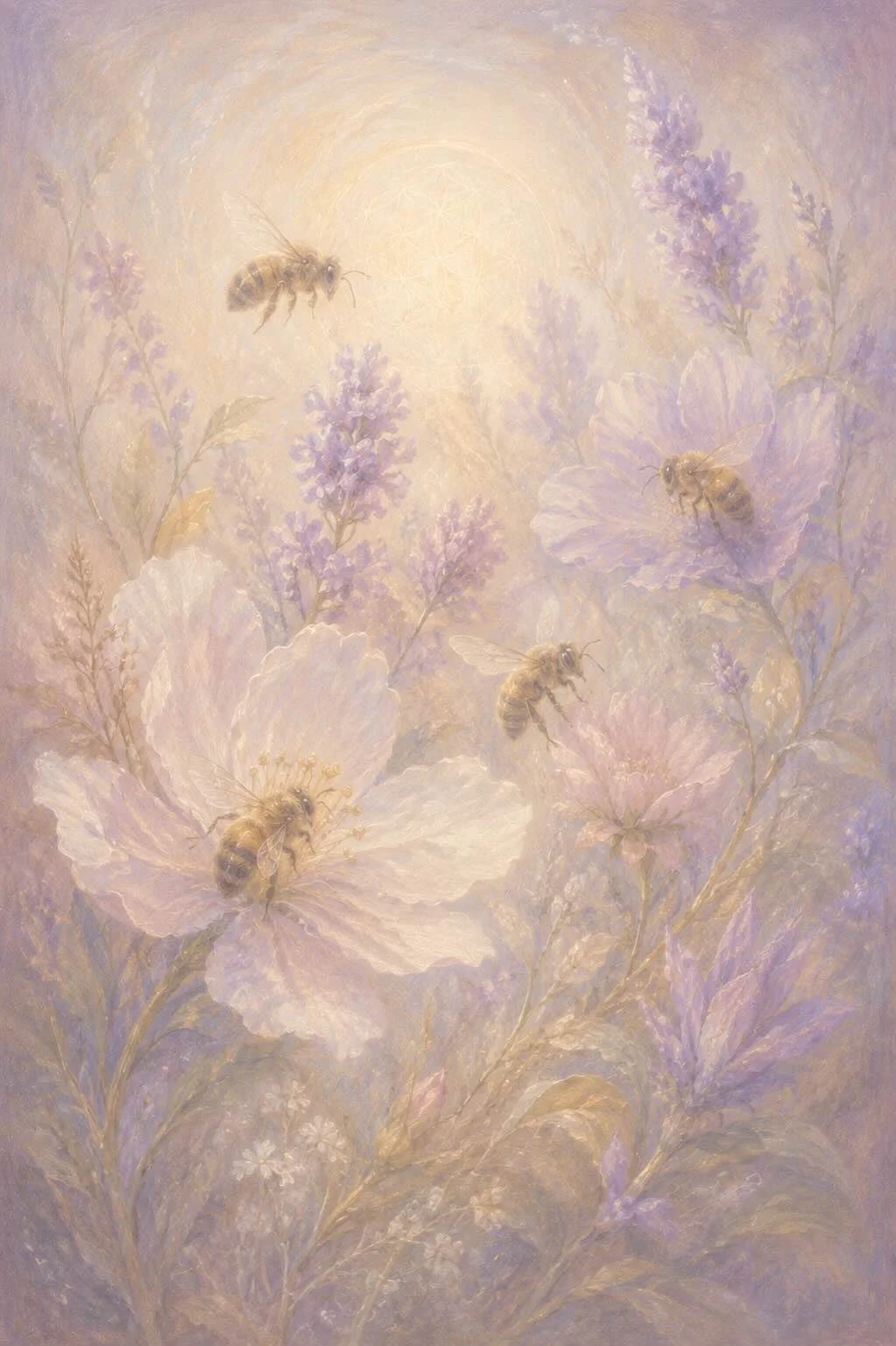
Bees pollinate flowers. Tree roots exchange nutrients through networks of fungi in the soil. The bacteria living in our gut interact with our immune system.
Every ecosystem exists thanks to countless relationships that influence one another.
We human beings are also part of this network. We breathe thanks to trees. We nourish ourselves through the work of other living beings. We exist in constant relationship with the world around us.
This is an observation rooted in biology and ecology.
For me, it is also an invitation to see animals not as beings separate from us, but as fellow participants in a much larger living system.
It is within this perspective that I place intuitive animal communication today.
Not as a phenomenon that must be proven at all costs.
But as a possibility for deepening our relationship with other living beings through presence, listening, and curiosity.
What Intuitive Animal Communication Is Not
When we talk about animal communication, it is easy to create unrealistic expectations.
For this reason, I believe it is important to clarify from the outset what I consider to be the boundaries of this practice.
Intuitive animal communication does not replace veterinary medicine.
If an animal shows symptoms, pain, or physical changes, a veterinarian should always be the first point of reference. Intuitive communication may accompany veterinary care, but its purpose is not to diagnose conditions or prescribe treatments.
It is not a tool for controlling an animal or imposing our will upon them.
Every animal is an individual with their own sensitivity, history, and freedom. Communication does not mean convincing them to behave as we would like, but rather trying to understand their perspective.
A Journey That Begins with Listening
If you have made it this far, you may have noticed that this article is only partly about animal communication.
Above all, it is about the way we choose to be in relationship with animals.
Because before asking ourselves whether it is possible to communicate intuitively with them, we can ask ourselves something even simpler.
How present are we, really, when we are with our animal?
Do we truly observe them? Do we notice the subtle changes in their body, in the way they move, look at us, approach us, or create distance? Or are we already focused on the next thing we need to do?
Over the years, I have learned that the deepest forms of communication do not necessarily begin with an extraordinary message.
Much more often, they begin with a moment of silence. With the choice to slow down. To let go, even for just a few moments, of the need to obtain answers.
And it is precisely there that something changes. Not only in the way we look at animals. But also in the way we look at ourselves.
Perhaps intuitive animal communication is not a destination to be reached.
Perhaps it is a path that invites us, day after day, to become more attentive observers, more present companions, and people capable of building relationships rooted in respect and listening.
For me, this is its deepest meaning.
Not learning to “talk” with animals.
But learning to be present enough to make space for what the relationship itself can teach us.
Your pet has something to tell you
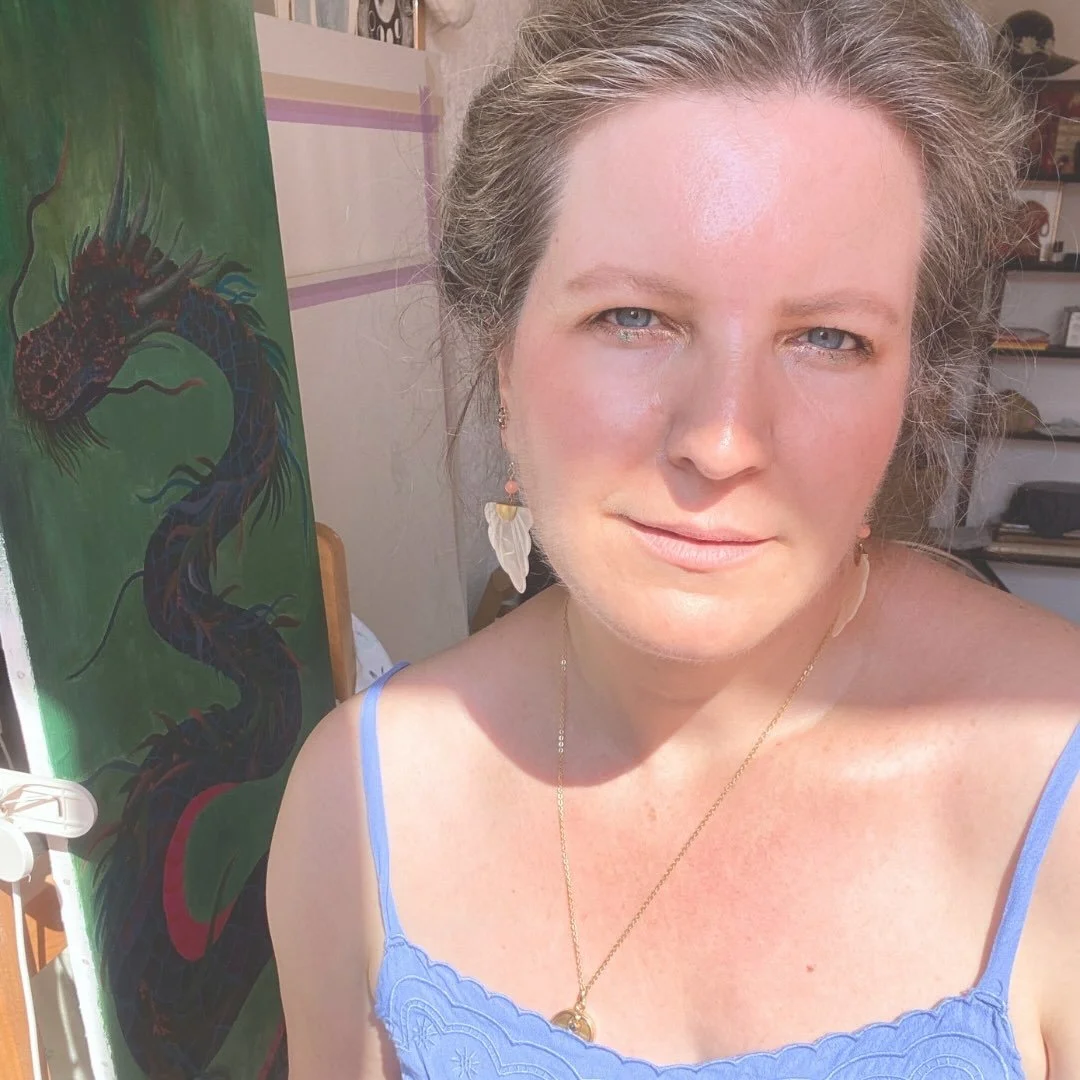
Hello, I’m Laura
I’m an animal communicator and intuitive artist. Through animal communication, support during pet loss and end-of-life, and my art, I create spaces for listening and connection between humans, animals and the Living World.
This is at the heart of Cuore Animale: remembering that our relationship with other living beings can open doors to a deeper understanding.
